DISPLAY TITLE
Subtitle is below the title
Hero Content Hero paragraph content displayed above the fold.
Executive summary
Caregiver burnout is widespread, recurring, and closely tied to the realities of family caregiving rather than isolated moments of stress. Drawing on new 2025 survey data from A Place for Mom, this report examines how stress and burnout manifest across emotional, physical, social, and financial dimensions, as well as the caregiving conditions that shape them.
Burnout is widespread and recurring
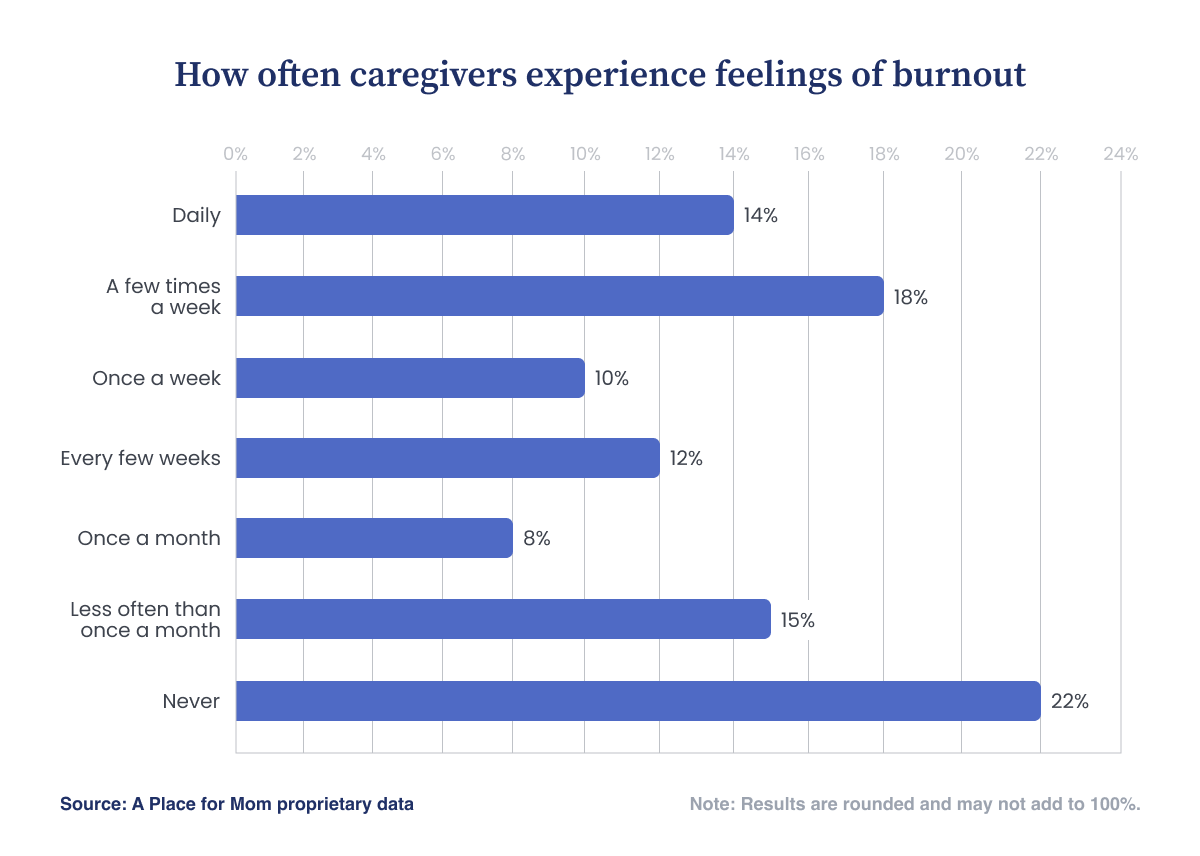
More than three-quarters of caregivers experience feelings of burnout, with many describing it as a weekly or even daily occurrence. Rather than appearing sporadically, burnout is often persistent, reflecting sustained pressure over time and the broader caregiving conditions in which it occurs.
Caregiver stress rarely appears in isolation
Burnout frequently overlaps with other forms of strain. Caregivers who report burnout also commonly experience emotional stress, disrupted sleep, changes in social connection, and financial pressure, underscoring that stress often spans multiple areas of daily life at once.
Early conditions shape caregiving stress
Preparedness and urgency play an important role at the outset of caregiving. Only about 1 in 4 caregivers report feeling completely prepared when caregiving began, and separate A Place for Mom data shows that urgent care needs and planning regret are common. These early conditions — limited preparation paired with time pressure — often coincide with elevated stress.
Strain and adaptation often coexist
Caregiving experiences are not uniform. Despite high levels of stress, many caregivers report confidence managing responsibilities, regular self-care, and stable or improved family relationships. This coexistence highlights a central tension in family caregiving: strain and adaptation frequently appear together rather than canceling each other out.
How caregiver stress shows up in family caregiving
SHORT TITLE on CONTENT
Caregiver burnout is widespread in the U.S., but it’s only one aspect of caregiver stress. In A Place for Mom’s 2025 caregiver survey, 78% of caregivers report experiencing feelings of burnout, with many describing burnout as a weekly or even daily occurrence. Beyond burnout, caregivers also experience emotional, physical, social, and financial impacts related to their role. These findings are aligned to those published by the World Health Organization in its report on family caregiving and public health.1
Emotionally
The survey data shows that many caregivers experience a broad range of emotional challenges, often as recurring parts of daily life. Stress and anxiety are the most prevalent, reported by 87% of caregivers at some point and experienced at least weekly by more than half. Feelings of overwhelm are almost as common, with 84% reporting it overall and nearly half experiencing it weekly.
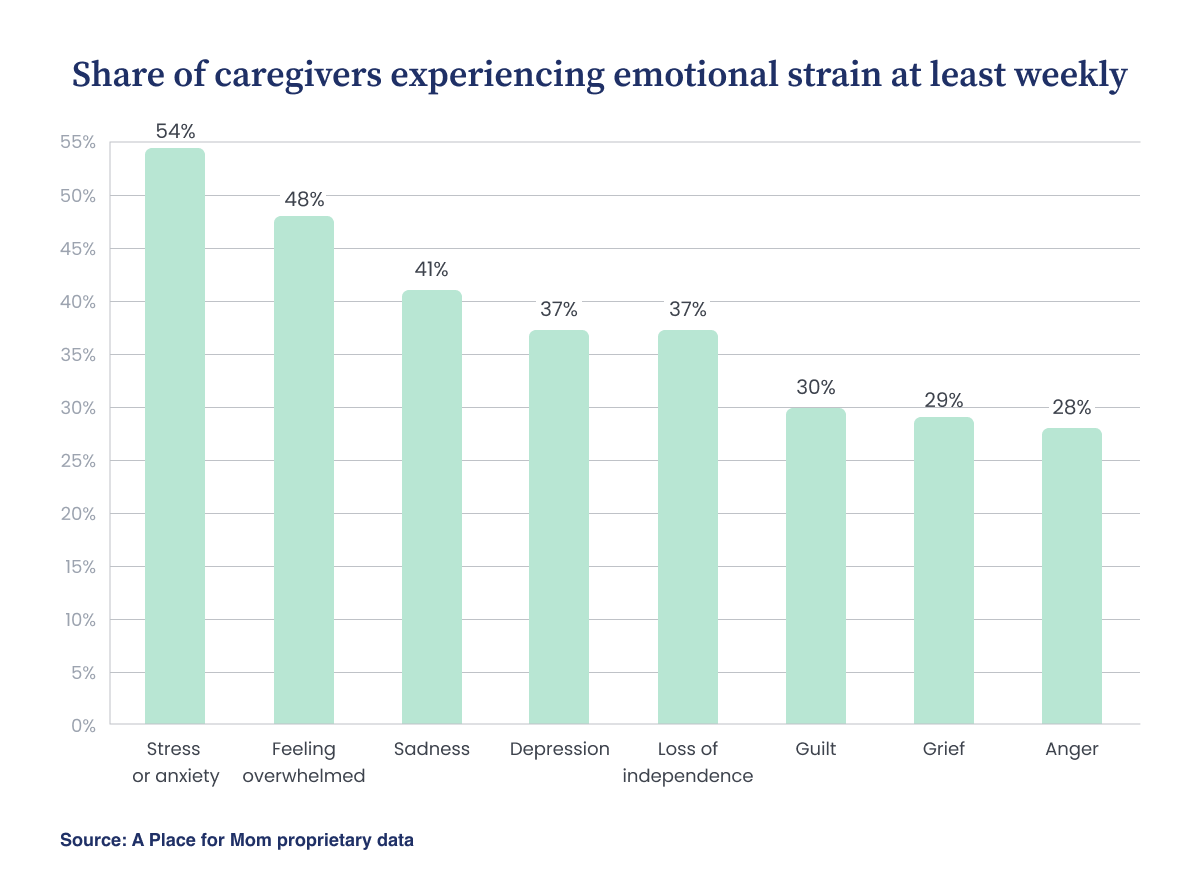
About 2 in 5 caregivers report feeling sad at least weekly, and more than one-third report recurring feelings of depression or a loss of independence. By contrast, emotions such as guilt, grief, and anger tend to surface less frequently, with roughly 3 in 10 caregivers experiencing them weekly. This distribution suggests that emotional strain among caregivers is variable rather than uniform, marked by persistent stress and overwhelm alongside other emotions that rise and fall over time. Even emotions that surface less frequently are experienced by most caregivers at some point.
| Emotion | Ever experienced | Never experienced |
| Stress/anxiety | 87% | 13% |
| Overwhelm | 84% | 16% |
| Sadness | 77% | 23% |
| Depression | 68% | 32% |
| Loss of independence | 65% | 35% |
| Guilt | 59% | 41% |
| Grief | 63% | 37% |
| Anger | 64% | 36% |
That complexity is also reflected in how caregivers assess their overall mental health. When asked how caregiving has affected them, one-third said their mental health had worsened, while another third reported no change, underscoring that emotional strain can coexist with stability rather than following a single trajectory.
Physically
Caregivers paint a complex picture of their overall physical health and describe both positive and negative changes resulting from their caregiving role. One-quarter say that their physical health has gotten worse, 32% say it has improved, and 43% say it hasn’t changed.
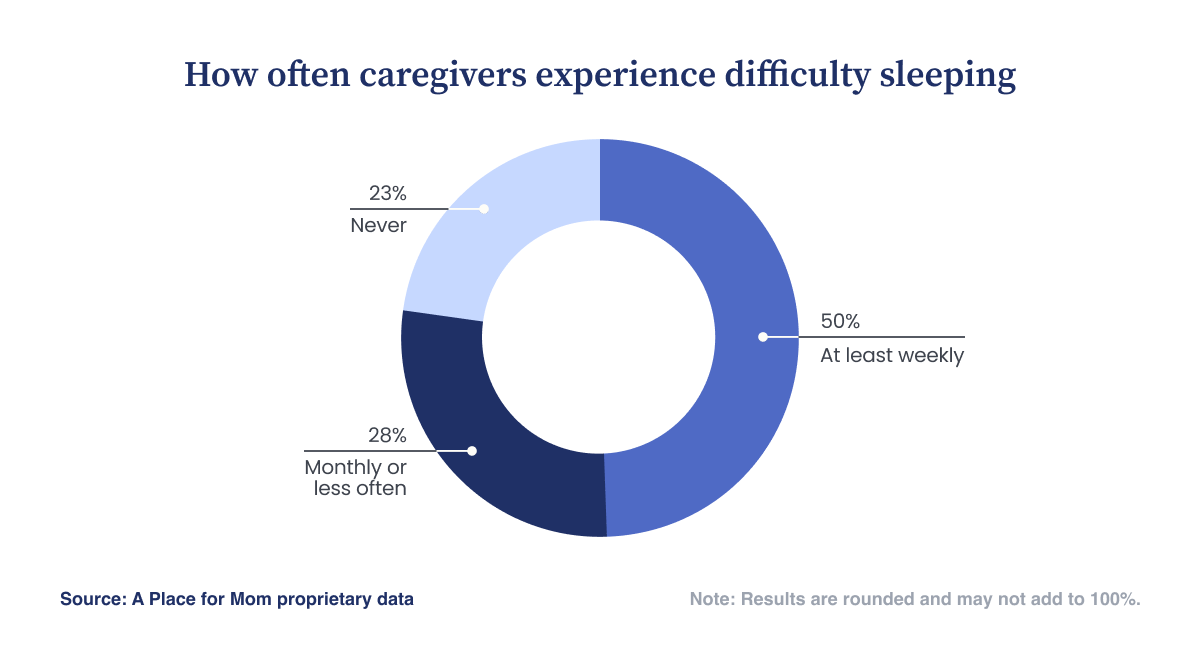
Sleep stood out as a frequent challenge: one-half of caregivers report having trouble sleeping at least once a week. Peer-reviewed research supports treating sleep as a meaningful marker of overall health risk and suggests the sleep-health relationship often runs both ways.2,3
Socially
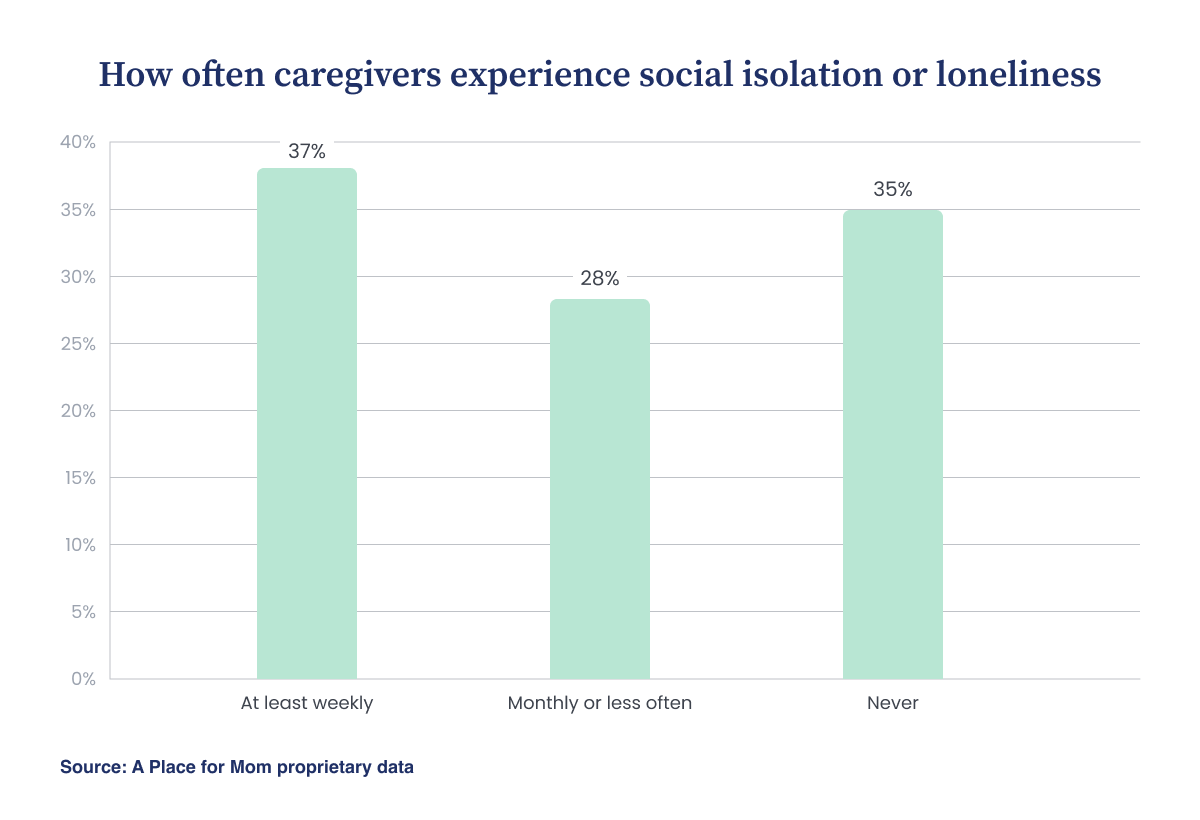
Feeling lonely and isolated at least once a week is common among family caregivers, and nearly 40% report that their social life has become worse after taking on caregiving responsibilities. That said, just over 60% say their social life has improved or hasn’t changed at all.
Financially
Nearly two-thirds of caregivers (64%) say that caregiving has not affected their financial situation or has coincided with improvement, while 36% report that their financial situation has worsened.
Even among caregivers whose finances have remained stable, many report feeling financial pressure related to caregiving.
Of the family caregivers who responded to this survey:
- 32% say they aren’t experiencing any financial strain at all.
- 68% say that caregiving has created at least some financial strain.
These findings help explain why financial concerns can add to caregiver stress even when caregivers remain highly motivated and committed to their loved one’s care. The connection between financial strain and caregiver well-being is supported by peer-reviewed research.4
“The weight of everything my mother needs is on me. I carry the weight, but it is heavy.”
Haley, W. E., & Elayoubi, J. (2023, November 14). Family caregiving as a global and lifespan public health issue. The Lancet Public Health.
Wang, X., Wang, R., & Zhang, D. (2024, March 5). Bidirectional associations between sleep duration, sleep quality, and multimorbidity: A longitudinal study. BMC Public Health.
FAQs
Starting senior care conversations early gives families time to explore insurance, benefits, and asset-planning strategies that may not be available later. It can help avoid rushed asset sales, tax consequences, and delays in Medicaid or veterans benefits eligibility. Proactive planning supports both financial stability and long-term care goals.
Families underestimate senior care costs because pricing is complex and changes over time. Base costs often exclude additional services, rising care needs, and annual increases, which raise the total expense.